Best Portable Air Compressors Under $100 for 31–33 Inch Overland Tires
This post contains affiliate links. As an Amazon Associate, I earn from qualifying purchases at no extra cost to you.
The question of which portable air compressor to buy changes substantially once you put a specific tire size and a specific use pattern on the table. If you are running 31–33 inch tires on a truck or SUV, airing down to 20–25 PSI for trail work, and then airing all four back up to street pressure at the trailhead or on the road home, you are describing a different task than someone topping off a nearly-full sedan tire in a parking lot. That distinction matters more than any headline spec on the product box.
This guide is written for that specific situation: budget-conscious overlanders who want to spend under $100, run 31–33 inch tires, and need a compressor that can handle a real four-tire air-up after trail use—not just a gas station emergency.
Emergency Top-Off vs. Four-Tire Trail Air-Up
These two tasks look similar on the surface—both involve putting air in tires—but they make completely different demands on a compressor.
An emergency top-off is typically one tire that is only somewhat below its road-pressure target. It is a much shorter task than restoring all four aired-down tires after trail use.
A four-tire trail air-up is a different job entirely. You have lowered all four tires for trail use and now need to restore the vehicle manufacturer’s road-pressure recommendation before highway driving. On 31–33 inch tires, that means moving a meaningful volume of air four times in succession. Actual runtime varies with tire volume, starting pressure, target pressure, supply voltage, ambient temperature, and the compressor itself, so use the manufacturer’s documentation rather than a generic time estimate.
This is precisely where compact inflators that perform acceptably in emergencies become a genuine problem for trail use.
Why Maximum PSI Is the Wrong Number to Focus On
The spec that receives the most attention on product listings is maximum PSI. You will see 150 PSI or 120 PSI on boxes and in search results, and it sounds like a meaningful performance indicator. For overlanding purposes, it mostly is not.
Any compressor rated to 100 PSI or above will reach the 35–42 PSI range that truck and SUV tires require on the street. The ceiling is not the issue. The questions that actually govern trail performance are how fast the compressor moves air and how long it can sustain that effort before thermal protection cuts it off. Maximum PSI tells you almost nothing about either of those, yet it is the number plastered on the front of every box.
Flow Rate: The Spec That Determines Fill Time
Flow rate, measured in cubic feet per minute (CFM) or liters per minute (LPM), helps determine how quickly a compressor can inflate a tire. Compare flow figures only when manufacturers state the test pressure, because output generally changes as tire pressure rises. If a listing omits flow data, do not infer it from maximum PSI.
A higher verified flow rate can shorten a four-tire air-up, but consider it alongside duty cycle, connection type, and the manufacturer’s rated tire-size range.
Duty Cycle and Heat
Duty cycle describes how long a compressor may run under specified conditions before it requires a rest period. The test conditions matter, so consult the current manual rather than applying one model’s duty-cycle figure to another.
This is the specification that most directly separates a compressor that frustrates you on the trail from one that completes the job. If thermal protection trips mid-fill and you are standing roadside in summer heat with two tires still below street pressure, you have a problem that no amount of digital display convenience solves.
Heat compounds with ambient temperature and cumulative runtime. A compressor that manages its duty cycle acceptably on a cool morning may thermal-trip repeatedly during a warm afternoon, especially in regions where late-season trail runs coincide with high ambient temperatures. On 31–33 inch tires, where each tire requires more fill time than a stock tire would, the heat load per session is meaningfully higher. The only ways to manage this are a higher duty cycle rating, disciplined rest intervals between tires, or accepting the slower fill times that follow—trade-offs that are worth understanding before you buy rather than after.
Tire Volume Matters
Larger tires hold more air. This is obvious in principle and easy to underestimate in practice. A 33 inch tire is noticeably larger in internal volume than a 265/70R17 or similar stock truck tire, and a 31 inch tire is still larger than the standard sizes most budget compressors are implicitly benchmarked against in marketing materials. Every extra liter of volume means more runtime per tire and more accumulated heat over a full four-tire session.
Compressors that market themselves broadly for trucks and SUVs without specifying tire size are often calibrated against stock or near-stock fitments. If your rig runs a lifted setup with 31–33 inch rubber, that implicit baseline does not apply to you, and the fill times and heat cycles you experience in the field will reflect that gap.
Connection Type and Cable or Hose Reach
Budget portable compressors typically connect to a vehicle through one of two paths: a 12V cigarette lighter or accessory port, or direct battery clamp connections. For a sustained four-tire fill, this difference has a practical impact.
A cigarette lighter connection is convenient, but every accessory socket has a current limit. Confirm that the compressor’s stated draw is compatible with the vehicle socket and fuse. Direct battery clamps avoid the accessory socket, but they must be connected in the order specified by the compressor manufacturer.
Cable length and air hose length determine how easily you can reach all four tires without repositioning your vehicle. On a full-size truck or SUV, rear tires can be ten or more feet from a cab-mounted accessory port or a hood-mounted battery. A short power cable or a short inflation hose forces either awkward positioning or repeated repositioning. For a four-tire job on a trail, that inconvenience compounds quickly and is worth checking against the specific compressor’s specs before purchase.
Xiaomi Mi Portable Electric Air Compressor 2
Xiaomi Mi Portable Electric Air Compressor 2 on Amazon
The Xiaomi Mi Portable Electric Air Compressor 2 is the compact option in this group. Check the current listing and manual for its controls, rated applications, run-time limits, charging or power requirements, and included accessories.
Its small format makes it attractive for pressure corrections and emergency use, but the verified product title does not establish suitability for repeated four-tire air-ups on 31–33 inch overland tires. Buyers considering it for that job should confirm the current tire-size guidance and duty limits before purchase.
For regular 33-inch tire use, choose a compressor whose manufacturer explicitly rates it for that tire size.
Kensun AC/DC Portable Air Compressor
Kensun AC/DC Portable Air Compressor on Amazon
The Kensun AC/DC Portable Air Compressor’s primary differentiator is dual power capability: it runs on both 12V DC from a vehicle connection and 110V AC from a standard household outlet. For overlanders who split time between primitive sites and developed campgrounds with electrical hookups, that flexibility has real utility—air up on AC power at a hookup site without drawing on your vehicle battery, and use the same unit for home garage tire maintenance.
Check the current listing for included accessories, cable reach, controls, and run-time guidance. Verify final pressure with a separate tire gauge.
Treat the Kensun as a light-duty inflator unless its current manufacturer documentation supports your tire size and repeated-fill use. Dual-power flexibility does not establish tire-size capability or sustained run time.
The Kensun earns its place for overlanders who genuinely value the AC/DC capability and who are working with tires on the lower end of this size range, or who air down conservatively. As a primary compressor for aggressive, repeated fills on 33 inch tires, a light-duty inflator at any price point is the wrong tool for the job.
VIAIR 88P Portable Compressor Kit — Best Performance Pick for 33-Inch Tires
VIAIR is one of the most consistently cited brands in overlanding air compressor discussions, and the 88P Portable Compressor Kit is its purpose-built entry point for truck and SUV owners running larger tires. The verified Amazon listing rates the 88P for tires up to 33 inches — making it the only unit in this comparison explicitly scoped to the upper end of this guide’s size range.
Verified from the current product title:
- 12V portable compressor kit
- Alligator-clamp connection
- Listed for tires up to 33 inches
For pressure rating, duty cycle, flow rate, amperage draw, cable and hose reach, and other performance data, check the current listing and VIAIR’s product documentation.
Direct battery clamps vs. cigarette lighter
The 88P uses alligator clamps rather than the cigarette lighter or accessory port. Confirm the connection sequence and working reach in the current manual before use.
Analog gauge and duty cycle
Follow VIAIR’s published operating and cooldown guidance rather than assuming that moving between tires provides sufficient thermal rest. Carry a standalone gauge for final pressure confirmation regardless of which compressor you use.
Who should buy it
The 88P is the clearest fit in this group for 33-inch tires because its verified product title explicitly covers tires up to that size.
VIAIR 88P Portable Compressor Kit on Amazon
Compact Comparison: Xiaomi vs. Kensun AC/DC vs. VIAIR 88P
| Xiaomi Mi Portable Electric Air Compressor 2 | Kensun AC/DC Portable Air Compressor | VIAIR 88P | |
|---|---|---|---|
| Maximum pressure | 150 PSI | 120 PSI | 120 PSI |
| Published tire-size guidance | No diameter rating; Xiaomi tests with 205/55 R16 tires | No diameter rating published | Up to 33 in. |
| Published continuous run / duty cycle | Not published; battery test data only | 30 min. at 35 PSI | 25 min. at 30 PSI |
| Power source | Built-in 2,000 mAh battery; USB-C charging | 12V DC vehicle plug or 110V AC outlet | 12V battery clamps |
| Air hose length | 200 mm / 7.9 in. | 19 ± 2 in. | 16 ft. |
| Pressure readout | Digital, rated ±1 PSI | Analog, rated ±1 PSI | 120 PSI gauge |
| Published airflow | Not published | 18 L/min DC; 20 L/min AC | 1.97 CFM at 0 PSI |
| Weight | 490 g / 1.08 lb. | Not published | 4.75 lb. |
| Tire connection | Schrader quick-connect adapter included | Woven hose; chuck type not specified | Solid-brass twist-on chuck |
| Best-supported use | Compact cordless top-offs; manufacturer data is for passenger-car tires | Home-and-road top-offs where AC/DC flexibility matters | Repeated trail air-ups on tires up to 33 in. |
Specification sources: Xiaomi product specifications, Kensun product specifications, and VIAIR 88P product specifications. “Not published” means the manufacturer page does not provide that figure; it is not an estimate.
Tire-Size Recommendations
31-inch tires: Confirm the current manufacturer’s tire-size and run-time guidance for the Xiaomi and Kensun before relying on either for four repeated fills. The VIAIR 88P’s product title explicitly includes tires up to 33 inches.
32-inch tires: Do not assume that an inflator capable of reaching the required pressure is rated for four consecutive fills. The VIAIR 88P’s stated size range includes 32-inch tires; verify current documentation for the other products.
33-inch tires: The VIAIR 88P is the only product in this comparison whose verified title explicitly covers this size. Do not rely on the Xiaomi or Kensun for this job unless their current manufacturer documentation explicitly supports it.
Honest Limitations of the Under-$100 Category
Fill speed. Flow rates in this price tier are lower than mid-range and premium units. Four-tire air-ups from aggressive trail pressure take meaningful time. Check manufacturer flow-rate specs against your tire size before purchasing if fill speed is a priority for your use case.
Duty cycle constraints. Budget compressors require thermal rest between extended fill sessions. Continuous operation past published limits is the primary cause of thermal shutoff and, in repeated cases, premature motor damage. Plan air-ups with pauses built in, and do not attempt consecutive full fills at maximum pressure without allowing cooldown time.
Pressure confirmation. Confirm final pressure with a separate gauge rather than relying on a display you have not independently checked.
Longevity under heavy use. Repeated operation outside published run and cooldown limits can shorten equipment life. Choose a higher-duty product when frequent four-tire air-ups are part of normal use.
Tires above 33 inches. None of the three units in this guide carry manufacturer ratings above 33 inches. For 35s and larger, a higher-capacity portable compressor or a dedicated onboard system is the appropriate tool for the job.
Field-Use Checklist: Safe Four-Tire Air-Up
- Compressor switched off before making any connection
- Battery clamps or accessory plug connected in the order specified by the manual
- Vehicle engine state set as instructed by the manufacturer before operating
- Target street PSI confirmed in advance — check the door-jamb placard
- Air hose fittings inspected for secure seating before pressurizing
- One tire at a time; observe cooldown intervals between tires per the product manual
- Final pressure verified with a calibrated standalone gauge, not the compressor gauge alone
- All four tires checked, including any you did not fully air down
- Compressor and hose disconnected and stowed before driving
- Street pressure confirmed on all four tires before reaching highway speeds
Common Mistakes
Running without the engine on. Sustained high-amp draw with no alternator running is a reliable way to end the day with a dead battery at the trailhead.
Ignoring the duty cycle. Continuous operation past published limits can trigger thermal protection or damage equipment. Follow the manual’s run and cooldown instructions.
Using the onboard gauge as final confirmation. Treat it as a rough indicator only. A tire reading correctly on a drifted gauge can be meaningfully under- or over-inflated at highway speeds.
Loose hose connection. A fitting that is not fully seated can leak slowly or blow off under pressure. Tug-test the connection before starting every fill.
Not knowing target pressure before starting. Airing up to an approximate number and then checking with a gauge adds unnecessary run time and thermal load to the unit.
Skipping rear tires because they feel firm. All four tires lose pressure during aggressive trail use, even when rear tires do not feel noticeably soft. Check every tire on every air-up, every time.
FAQ
My cigarette lighter socket is unreliable. Does that matter? For the Xiaomi and Kensun AC/DC, yes — a weak or intermittent socket affects performance and can cause inconsistent inflation. The VIAIR 88P’s direct battery clamp connection bypasses the lighter socket entirely, making it the better choice for rigs with unreliable accessory ports.
Do I need a separate tire pressure gauge with any of these? Yes, with all three. Use a quality standalone gauge for final pressure verification regardless of which unit you run.
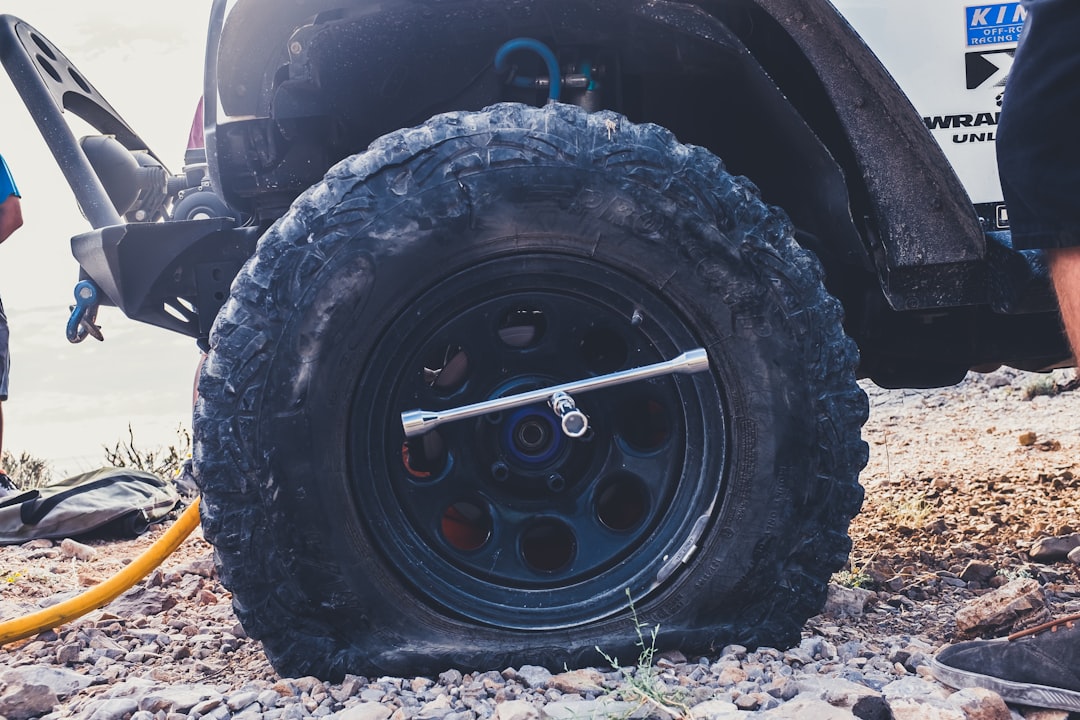
What if a tire goes completely flat on the trail? A tire at zero pressure may be unseated, punctured, or otherwise unsafe to inflate normally. Inspect it first and follow the tire, wheel, and compressor manufacturers’ instructions. A portable inflator is not a substitute for tire repair or safe bead-seating equipment.
Can I use these at altitude or in extreme heat? Performance can degrade in high-altitude or high-temperature conditions. Check the manufacturer’s documentation for environmental operating limits before a trip to demanding terrain — most budget compressors do not publish altitude-specific data, so plan for slower fill speeds and more conservative duty cycle use.
Conclusion
For overlanders running 31–33-inch tires on a budget, each compressor in this group covers a specific use case. The Xiaomi is the compact, low-friction choice for 31-inch fitments and occasional trail use. The Kensun AC/DC adds dual-power flexibility for overlanders who mix primitive and developed camping. The VIAIR 88P is the purpose-built recommendation at the upper end of this tire range — it is the only unit in the group with a manufacturer rating for tires up to 33 inches, and it reflects the broader confidence the overlanding community has placed in the brand over years of documented field use.
This comparison does not establish that every product is suitable across the full 31–33-inch range. The VIAIR 88P is the only one whose verified product title explicitly states support up to 33 inches. For any compressor, match the current manufacturer rating to your tire size, stay inside published operating limits, and verify final pressure with a separate gauge.