Used Rooftop Tent Buying Guide: Inspection Checklist and Fair-Price Traps
This post contains affiliate links. As an Amazon Associate, I earn from qualifying purchases at no extra cost to you.
The used rooftop tent market is one of the best places in overlanding to cut your gear budget without cutting quality. A softshell that retails for $1,200 new regularly appears for $550-$650 once it is two or three years old and the original owner upgrades to a hardshell. The problem is that the same market also sells waterlogged foam cores, delaminating fabric shells, and worn-out zippers at near-retail prices to buyers who do not know what they are looking at.
Rooftop tents hold their resale value unusually well. A quality brand typically loses 30-50% of retail over two to three years of regular use - the productive depreciation window where a sharp buyer gets real value. Outside that window the math changes: new units rarely discount, and heavily worn units often carry inflated asking prices because sellers have no honest reference point for what specific defects cost to repair.
This guide gives you the reference points sellers do not want you to have: what to physically inspect, which defects are disqualifying versus negotiating chips, and how the most common pricing tactics in the used RTT market actually work.
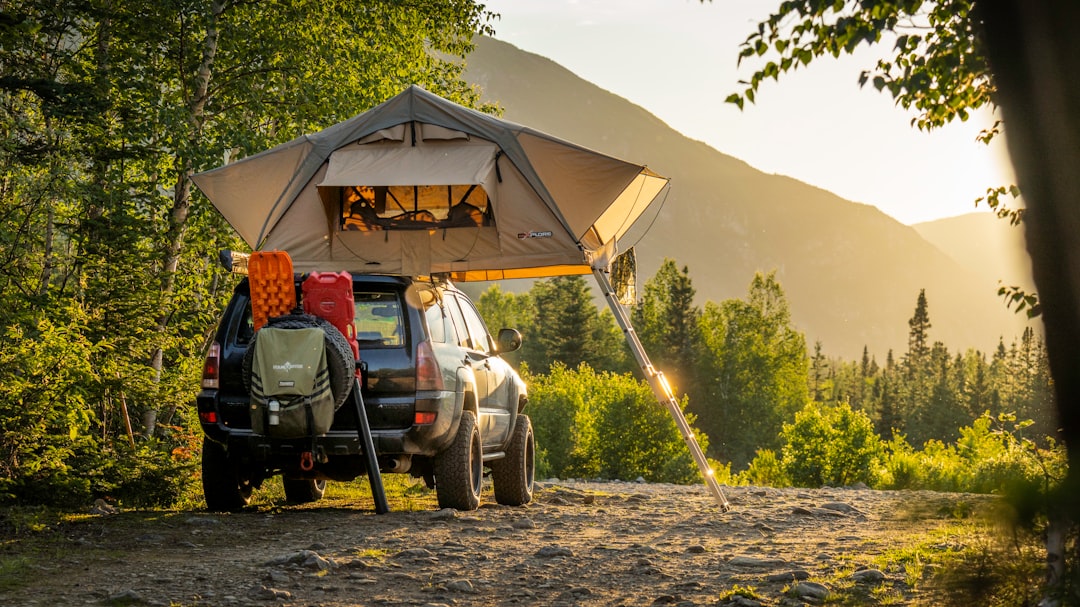
Photo by Alfred Boivin on Unsplash
Why Used Rooftop Tents Hold Their Value (and What That Means for Buyers)
Most camping gear depreciates aggressively. A sleeping bag loses 40-50% of its value when the box is opened. Ground tents, camp stoves, and trekking poles follow similar curves. Rooftop tents are different, driven by three factors: strong demand from a rapidly growing overlanding community, limited availability of used units because most owners keep their tent for years before selling, and brand reputation that transfers intact in the secondary market.
The practical result is a used RTT market where $600-$700 for a used Tepui softshell or $1,600-$1,900 for a used iKamper Skycamp Mini are considered reasonable asks. Quality units do not appear at 20 cents on the dollar unless something is genuinely wrong with them - and that expectation, baked into most sellers’ pricing, is exactly what creates the traps this guide covers.
Real savings opportunities exist in specific situations. Tents from smaller or discontinued brands depreciate faster because buyers worry about warranty support and replacement parts. Units with cosmetic damage - scratched shells, faded annex fabric, scuffed ladder rails - that do not affect function often sell 20-30% below pristine units. Tents sold without original rack hardware are typically priced lower, but you need to know what that hardware actually costs to replace independently before deciding whether the discount is real.
The Thule Tepui Explorer Ayer 2 is a useful retail price anchor for the softshell segment. When evaluating any comparable used softshell, compare the asking price to its current MSRP. If the spread is less than 30%, you are taking on all the risk of an unknown wear history for minimal financial benefit. Buying used becomes the clear choice at 45-65% of retail for a well-documented unit in verified good condition. At anything above 75% of retail, you need an unusually compelling story from the seller to justify the reduced savings.
Know Your Roof Load Rating Before Searching for a Used Rooftop Tent
This step happens before you look at a single listing. Your vehicle has two distinct roof load ratings: a dynamic rating for driving, typically 150-200 lbs on most SUVs and half-ton trucks, and a higher static rating for when the vehicle is stationary. Your owner’s manual specifies both. Rooftop tents range from roughly 65 lbs for compact lightweight softshells to 170+ lbs for large hardshells. The loaded weight - tent plus sleeping occupants - is what matters in the parked context where RTTs are used, but even empty, heavier hardshells can stress the dynamic limit during driving.
Check your owner’s manual before you search and build your RTT shopping list around tents whose dry weight leaves comfortable margin under your vehicle’s dynamic rating, not just the static one.
A purpose-built roof rack is not optional. The tent mounts to the rack, and the rack’s construction determines whether the tent stays properly secured across washboard roads and rough terrain. A quality platform rack like the Front Runner Slimsport Roof Rack Kit handles RTT loads correctly. Beyond weight capacity, the tent must also be compatible with your rack’s crossbar configuration and profile. Confirm that the tent’s footprint and crossbar spread match your actual rack setup before making the trip to inspect.
If the seller includes a rack with the used tent, price and evaluate the rack independently. A worn or incompatible rack bundled to justify a higher package price is one of the most common pricing traps in the used RTT market. Full vehicle compatibility guidance is covered in How To Pick An Overlanding Vehicle On A Tight Budget.
How to Inspect a Used Rooftop Tent: A 10-Step Checklist
An in-person inspection should take 30-45 minutes. Ask the seller to have the tent open and in the sun before you arrive - this warms any mold in the foam and makes problems far more detectable. A seller who cannot or will not open the tent for a proper inspection is a red flag that no explanation makes acceptable.
Work through these steps in order:
-
Check the foam mattress for moisture. Press firmly across the entire surface from edge to edge. A dry mattress springs back uniformly. A wet or compressed core feels dense, stays depressed, and may have uneven resistance. Smell the surface at close range for mildew. A pinless moisture meter like the Extech MO280 reads moisture content without puncturing the surface and gives you an objective reading. Any elevated reading indicates moisture retention that warrants serious concern.
-
Inspect the rainfly and shell fabric. On softshells, look for UV bleaching, delamination in the form of flaking or bubbling fabric coating, and any patches or repairs. Seam tape that is peeling means the waterproofing has failed and the tent will leak until re-treated. On hardshells, check for cracks or stress fractures around mounting bolt holes and inspect the hinge line for gaps when the shell is fully closed.
-
Test every zipper under load. Zip and unzip each zipper panel while applying slight lateral pressure on the track. A worn zipper tooth skips or derails under this test even if it runs smoothly unloaded. Zipper replacement from RTT manufacturers typically costs $30-$80 per panel depending on length and brand.
-
Examine the ladder thoroughly. Climb the ladder and load each rung with your full body weight. Feel for flex and listen for cracking sounds. Inspect ladder hinges for rust, cracking, or deformed pivot holes. Worn rubber feet are a minor and cheap fix. A bent or cracked aluminum rail is a harder repair to source for older models.
-
Test the gas struts on hardshells. Open the hardshell to its full deployed position and release it. The lid should hold itself open with no assistance. Weak struts that allow the lid to drift or fall back indicate worn struts needing replacement. Replacement strut pairs typically run $50-$150 depending on the brand, and this failure generally accelerates once it starts.
-
Audit all mounting hardware. Count every bolt, clamp plate, T-nut, and bracket. Contact the manufacturer with the model number before your visit if you are unsure what should be included - most brands publish complete hardware lists for current and recent models.
-
Open and close the tent at least three times. The first cycle hides binding poles, stiff linkages, and misaligned zipper pulls that a single demonstration conceals. By the third cycle, problems that only appear under repeated use will show themselves.
-
Search for evidence of past repairs. Seam sealer spots, fabric patches, glued sections, and replaced rivets all indicate the tent has had problems. A disclosed and correctly repaired defect is often acceptable. An undisclosed repair changes the negotiation significantly, because it raises the question of what else went unmentioned.
-
Inspect the annex (if included). Annex fabric tears most consistently at stress points near attachment clips and zipper corners. Examine those areas under tension if possible. A missing or damaged annex reduces the tent’s value by $100-$200 depending on the model and whether the manufacturer still sells replacements.
-
Verify the model number and request documentation. Many older models share visual similarity with newer versions while having different specs, materials, and part compatibility. Original purchase receipts, warranty registration, or the original retailer listing screenshot help establish accurate age and provenance.
Moisture, Mold, and UV Damage: The Costliest Used Rooftop Tent Defects
These three failure modes account for the majority of hidden damage in used RTTs and are most easily missed in a quick look-over.
Moisture and mold develop inside the mattress foam when the tent is packed wet or stored without adequate airflow. The mattress cover can look and feel clean while mold colonies are established in the foam underneath. The smell does not become apparent until the foam warms in direct sun - which is why asking the seller to have the tent open outside before your arrival matters. As REI’s tent care and repair guidance explains, mold that has penetrated foam rather than sitting on a surface generally cannot be safely remediated. The mattress needs replacement. Replacement foam cores and fitted covers for name-brand RTTs cost $150-$350 depending on brand and tent size.
Bringing the Extech MO280 pinless moisture meter to every used RTT inspection removes guesswork entirely. It pays for itself the first time it catches a saturated mattress in a tent presented as dry and clean.
UV degradation attacks polyester and canvas-polycotton fabrics after sustained sun exposure. Early signs are uneven color fading and bright spots where the UV-blocking coating has thinned. Advanced UV damage makes fabric brittle - confirm it by folding a small section of the rainfly gently and checking for micro-tears or cracking along the fold line. Most RTT manufacturers apply DWR (durable water repellent) treatments that are UV-sensitive, meaning a tent that has lived on a vehicle roof through multiple Southwest summers may look intact but fail to waterproof in anything heavier than light drizzle. A DWR refresh spray can buy another season on mild UV damage but does not reverse structural fabric degradation.
Fiberglass delamination applies specifically to hardshell lids. The outer gelcoat layer separates from the fiberglass substrate in a characteristic bubbling or flaking pattern. Minor surface delamination is cosmetic and stable. Delamination that has progressed to structural layers compromises the lid’s rigidity and is expensive to repair correctly. The thumbnail test identifies it: press a thumbnail firmly against any suspect area. Solid fiberglass resists without movement. Delaminated layers flex or produce a hollow sound when tapped firmly with a knuckle.
Decoding Fair-Price Traps in the Used RTT Market
Knowing what a tent should cost is the most underused tool buyers bring to a transaction. These are the most common pricing tactics that push used RTT prices above their actual market value.
The bundled rack markup. A seller includes a rack - often an entry-level or discontinued model with its own wear - and prices the package at “tent price plus a little extra for the rack.” That extra frequently exceeds the rack’s actual current market value. Beyond price, the included rack may not fit your vehicle, or it may have load capacity or crossbar dimensions that conflict with the tent you are buying. Price the tent and rack separately using active listings before evaluating any bundle. Do not let the seller’s bundling logic set your reference point.
The “barely used” premium. Sellers describe light use regardless of actual history. A tent used on 20 weekend trips per year accumulates 40 nights of use per season - over three seasons, that is 120 nights, meaningful wear by any measure. Ask directly how many nights per year the tent was actually used and for how many years. Any answer above 15-20 nights per year for more than two seasons is not a lightly used tent, and pricing should reflect normal wear accordingly.
Near-retail pricing without documentation. A two-year-old tent at 80-85% of current retail could be justified with the original receipt, verified excellent condition, and documented low use. Without documentation, the premium is not warranted. The Thule roof rack buying guide gives useful context for understanding how manufacturers structure product lines and what warranty coverage typically means for used gear valuation.
Missing hardware presented as minor. Replacement mounting kits for specific RTT models cost $40-$150 or can be completely unavailable for discontinued models. Always confirm the complete contents of what you are buying and independently verify part availability and cost before accepting a price.
A practical framework: target 50-65% of current retail for a verified-good 2-3 year old softshell from a brand in active production. Target 35-50% for a 4-5 year old unit with normal wear and documentation. Apply a 10-20% reduction for each meaningful defect you can put a repair cost to. Any seller at 70%+ of retail for a two-plus year old unit without documentation needs an unusually strong argument to justify it.
Common Mistakes to Avoid When Buying a Used Rooftop Tent
Not confirming fitment before making the trip. You drive two hours to inspect a tent, like what you see, buy it, and discover at home that the mounting footprint does not work with your crossbar spacing or crossbar outer dimension. Get the tent’s minimum and maximum crossbar span, the mounting hardware style, and the recommended crossbar width from the manufacturer spec sheet for that specific model before you schedule an inspection. Do not rely on the listing description.
Skipping the moisture test because the tent looks clean. Foam cores can hold significant moisture with no visible signs on the cover or in the tent interior. A tent stored in a garage can still have a compromised mattress if it was ever packed wet, even once. This is the inspection step most buyers skip, and it is the defect most likely to result in a $200-$350 mattress replacement within the first season of use.
Treating one demonstration as a complete function check. Sellers show the tent opening once, slowly, in ideal conditions. That is not representative of how you will deploy it on a cold morning at altitude after a wet night. Work every zipper under slight sideways tension. Load the ladder with your full body weight on each rung. Drive all linkages to the end of their travel range. Defects that appear only under load or at temperature extremes will not surface in a casual seller demonstration.
Overlooking discontinued model risk. A used tent from a brand that has exited the North American market or discontinued the specific model carries more risk than the price suggests. Replacement zippers, gas struts, mounting hardware, and fabric panels are often only available from the original manufacturer. Verify that parts are currently in stock for the exact model before committing. If they are not, price that uncertainty into your offer.
Calculating price off list price instead of total acquisition cost. A used tent priced attractively still needs a compatible rack, correct mounting hardware, and possibly a seam seal refresh or DWR treatment. Calculate the complete cost to have the tent functional and mounted on your vehicle before deciding whether a price represents a genuine deal. Budget overlanding means total cost, not purchase price in isolation.
Frequently Asked Questions
What percentage of retail is a fair price for a used rooftop tent?
For a 2-3 year old softshell from a brand currently in production, 50-65% of current retail is the reasonable range for a verified-good unit. A 4-5 year old unit with normal wear and available documentation should be 35-50%. Beyond five years of age, or for any tent with UV fading, missing hardware, or no documentation, 30-40% of retail is the appropriate ceiling before negotiating for specific defects. Any seller asking above 70% of retail for a two-plus year old tent without documentation needs to justify it - the default assumption at that premium should be skepticism, not interest.
Can you replace the mattress in a used rooftop tent?
Yes, and the cost should factor directly into your negotiation. Replacement foam is available for most major RTT brands from the manufacturer or from third-party foam suppliers who cut high-density sheets to exact floor dimensions. Quality replacement foam in a 2-person size typically costs $80-$180 depending on thickness and density spec. An OEM fitted cover adds $60-$150, or a local upholstery shop can fabricate a custom cover for comparable cost. If the tent is priced correctly and every other component passes inspection, absorbing a mattress replacement is a reasonable repair to plan for. The key is that the replacement cost comes out of the asking price during negotiation, not from a separate post-purchase budget.
What is the most important difference between buying a used softshell versus a used hardshell RTT?
Softshells give you more fabric to inspect, with correspondingly more potential for UV degradation, delaminated coatings, and failed DWR waterproofing. Fabric failures are generally cheaper to repair and parts are more available. Hardshells have fewer fabric concerns but introduce structural risk: cracked lids, misaligned hinge seams, and failed gas struts are more expensive to fix and harder to source for discontinued models. The other critical factor is pricing: hardshells depreciate more slowly, so the absolute dollar savings on a used hardshell are proportionally smaller. For a buyer on a tight budget, a verified-good used softshell from an active brand typically delivers better value per dollar saved than a comparably discounted used hardshell.
Conclusion
The used rooftop tent market rewards buyers who show up informed and penalizes those who treat it like any other secondhand gear transaction. The inspection checklist covers the genuine failure points that sellers either overlook or hope you will. The pricing framework gives you a defensible number to negotiate from rather than accepting whatever figure the listing opens with.
A $500 used softshell in verified excellent condition with original documentation is an outstanding deal. A $900 used softshell with a saturated mattress, worn zippers, and missing mounting hardware is overpriced, full stop. Know the difference before you drive anywhere. Confirm fitment for your specific vehicle and rack setup before you schedule the inspection, bring a moisture meter, and work through the full checklist in person. Those steps alone put you ahead of the majority of buyers currently losing money in this market.
If this guide is useful to you, bookmark it and pull it up on your phone when you are standing in the seller’s driveway - the inspection checklist is worth having open during the actual evaluation.
Related Reading
- How To Pick An Overlanding Vehicle On A Tight Budget - roof load capacity, payload ratings, and vehicle suitability before committing to any rooftop gear
- Budget Overlanding Gear That Isn’t Worth The Savings - where cutting costs on overlanding equipment reliably costs you more in the long run