Best Budget Tire Brands and Sizes for Overlanding Different Terrains and Conditions
This post contains affiliate links. As an Amazon Associate, I earn from qualifying purchases at no extra cost to you.
Tires are the single most impactful upgrade on any overland build, and they are also where buyers make the most expensive mistakes. A set of aggressive mud terrains looks purposeful on a lifted truck, but if 80 percent of your miles are paved highway and graded gravel roads, you have bought noisy, fast-wearing rubber that underperforms everywhere you actually drive. The reverse error is equally costly: mounting cheap highway tires to preserve the budget, then discovering on your first real trail that sidewalls cut on shale and traction disappears on wet clay.
Budget overlanding does not mean buying the least expensive tire on the shelf. It means finding the right category for your actual terrain mix, sizing it correctly for your vehicle’s clearance and load requirements, and then identifying a brand that delivers real capability without a premium name tag. There are genuinely capable all-terrain tires available for under $180 per tire, but knowing what separates a smart purchase from a costly compromise requires understanding what the specs actually mean before the price tag makes the decision for you.
This guide covers tire categories, how to decode sizing designations, three budget all-terrain options at distinct value tiers, a terrain-matching framework, airing-down strategy, and the mistakes that most reliably leave overlanders stranded.
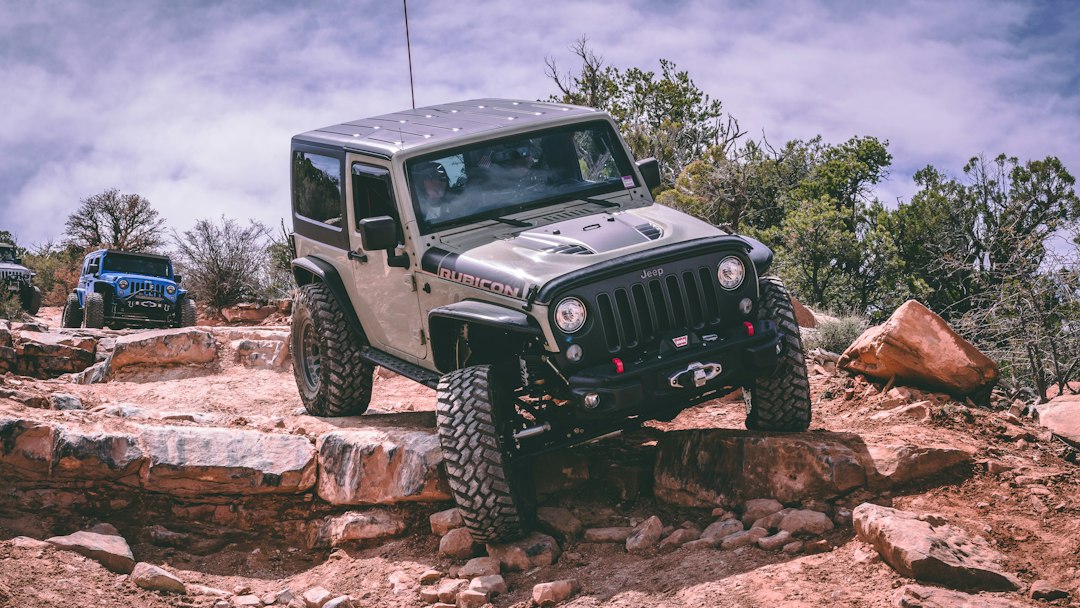
AT vs MT vs HT: Picking the Right Tire Category for Budget Overlanding
The three broad tire categories map to distinct use cases, and choosing the wrong one is an expensive error that compounds over the life of the tire.
Highway Terrain (HT) tires are designed for on-road comfort and longevity on trucks and SUVs. They use a closed, shallow tread pattern optimized for low noise, high mileage, and fuel efficiency on pavement. On a graded gravel road they function adequately. On anything with loose dirt, clay, mud, or rocks, traction is marginal and the sidewalls are not constructed to withstand repeated off-road stress. HT tires do not belong on an overland build. That is a category mismatch, not a nuanced judgment.
All-Terrain (AT) tires are the correct answer for the vast majority of overlanders. They run quietly enough on highway for daily commuting, handle gravel, hardpack, light mud, and moderate rocky terrain without complaint, and typically come with reinforced Load Range C or E sidewalls that resist punctures and sidewall cuts. The tread void ratio is high enough to self-clean in loose conditions while retaining enough contact patch to grip on pavement. For builds that mix highway miles with weekend trail use, AT tires hit the right balance across every dimension.
Mud Terrain (MT) tires make sense only when your routes regularly include deep mud, loose shale, or technical rock crawling. The aggressive tread causes significant road noise at highway speeds, reduces fuel economy by 1-2 MPG on average, and wears faster on pavement. Budget MT tires exist, but the tradeoffs are real. Most overlanders who buy MTs for visual effect find themselves wishing they had stayed with ATs once they see daily commute performance and fuel costs.
The three tires reviewed in this guide are all ATs. This reflects where the best budget value sits right now, and it aligns with the terrain profile of most budget overlanders running forest roads, desert two-tracks, mountain gravel, and occasional soft terrain.
How to Read Budget Overlanding Tire Sizes
Tire sizing looks complicated until you break it into a sequential process. Getting it wrong means purchasing tires that do not fit your rims, rub your fenders under compression, or fail to meet your vehicle’s load requirements.
How to decode a metric tire size designation:
-
Section width: In a size like 265/70R17, the first number, “265,” is the tire’s width in millimeters at its widest point across the tread. Wider tires create a larger contact patch and float better in soft sand, but they add unsprung weight and increase the probability of clearance problems on stock suspension geometry.
-
Aspect ratio: The second number, “70,” means the sidewall height equals 70 percent of the section width. A higher aspect ratio, such as 75 or 80, gives more sidewall height and flex, which matters significantly for aired-down off-road use on rocks.
-
Construction and rim diameter: “R17” means radial construction designed for a 17-inch rim. The rim diameter must match your wheels exactly. This is a non-recoverable purchasing error if you get it wrong.
-
Overall diameter calculation: Estimate overall diameter in inches with this formula: [(aspect ratio divided by 100, multiplied by section width in mm, multiplied by 2) divided by 25.4] plus rim diameter. For 265/70R17: [(0.70 × 265 × 2) / 25.4] + 17 equals approximately 31.6 inches. This number determines ground clearance and how much a size change shifts your effective final drive ratio.
-
Load index and speed rating: After the size designation you will see a number-letter code such as “115T” or “104H.” The number is the load index per tire, which corresponds to a maximum load capacity at rated pressure — consult the full load index table for specific values. The letter is the speed rating. Before purchasing, confirm that the tire’s load index meets or exceeds the minimum specified on your vehicle’s door placard. NHTSA tire load rating guidance provides the full reference tables and explains the federal compliance framework.
A 265/70R17 and a 285/75R16 can share a similar overall diameter while requiring different rims and carrying very different sidewall profiles and width characteristics. Understanding this math lets you compare tires that look different on paper.
Best Budget All-Terrain Tires for Overlanding Builds
The three tires below represent distinct price tiers within the AT category. None of them is the absolute cheapest AT available, which is intentional. The lowest price tier often sacrifices load index, sidewall construction, or compound longevity in ways that eliminate the cost savings before the tires are halfway worn.
Cooper Discoverer Road and Trail AT
The Cooper Discoverer Road and Trail AT All-Terrain Tire, 265/70R17 SL 115T comes from a domestic brand with a long track record in the truck tire segment. The Road and Trail variant is Cooper’s road-balanced option within the Discoverer family, prioritizing on-road manners while retaining genuine off-road capability.
The 265/70R17 size fits 17-inch wheels. The SL designation at load index 115 indicates the tire’s load capacity at rated pressure; verify this meets or exceeds the minimum on your vehicle’s door placard before purchasing. Full product specifications are available on the Cooper Tire official site.
This tire performs best in the 60-70 percent pavement, 30-40 percent dirt-road scenario that describes most overlanders’ actual use. For sustained deep-mud routes or aggressive rock crawling, a mid-tier MT with stronger sidewall protection would be more appropriate.
Falken Wildpeak AT3W
The FALKEN 235/65R17 104H SL FALKEN WILDPEAK AT3W BW is arguably the strongest value proposition in the budget all-terrain tier. For overlanders who run shoulder-season mountain terrain where trails can see early snow or icy morning conditions, verify the tire’s specific certifications and ratings for those conditions before purchasing.
The 235/65R17 is narrower and lower in profile than a 265/70R17, which may suit lighter SUVs, crossover-based builds, or smaller trucks where suspension geometry and load rating favor a more conservative footprint. The lower aspect ratio (65 versus 70) means less sidewall height available when airing down for technical terrain — worth factoring in if your build does regular rock work at low pressures. Detailed specifications are on the official Falken Tire website.
This is the right choice for lighter builds, four-season climates, and any overlander who needs genuine winter traction from a single tire.
Laufenn X FIT AT
The Laufenn X FIT AT is the entry-level option in this group. Laufenn is a sub-brand of Hankook, one of the world’s largest tire manufacturers. This matters for a specific reason: even a sub-brand benefits from the parent company’s compound research, quality control standards, and manufacturing infrastructure - a meaningfully different supply chain than a fully independent budget brand with no parent company investment behind it.
The X FIT AT is designed for light to moderate off-road use and regular daily driving. The honest assessment is that it is not at the performance level of the Falken AT3W or Cooper Discoverer. If your overlanding is primarily gravel roads and occasional soft terrain excursions, the X FIT AT delivers reasonable value per dollar. If you push terrain consistently, the incremental cost of the Cooper or Falken is a better long-term investment.
Matching Budget Tire Size to Your Vehicle and Terrain
Tire size is not just about ground clearance. Increasing overall diameter effectively lowers your final drive ratio, raising engine RPM at highway speed and reducing fuel economy. A wider tire affects handling balance and fender clearance. A higher aspect ratio changes how the tire behaves when aired down and how much sidewall protection it offers against sharp rocks. Getting the size right before buying prevents expensive rework.
The table below maps common overland vehicle types to appropriate all-terrain sizes, with and without a modest lift.
| Vehicle Type | Max Size (Stock) | Common AT Size | With 2-3 Inch Lift |
|---|---|---|---|
| Midsize truck (Tacoma, Colorado, Ranger) | 31-32 in | 265/70R17 | 285/70R17 or 265/75R16 |
| Half-ton truck (F-150, Silverado 1500) | 32-33 in | 265/70R18 or 275/65R18 | 285/70R17 or 305/65R17 |
| Body-on-frame SUV (4Runner, Wrangler, Xterra) | 31-33 in | 265/70R17 | 285/75R16 or 275/70R18 |
| Crossover-based SUV (RAV4, CRV) | 29-30 in | 235/65R17 or 245/65R17 | Limited by suspension geometry |
Going larger than stock clearance allows causes rubbing on the front fender liner at full steering lock and often contacts the lower control arm over rough terrain under compression. Before ordering any tire meaningfully larger than your factory spec, measure clearance with wheels turned to full lock and the suspension pushed near bump stop position. A suspension lift resolves most fitment problems, but it is a cost that must be part of the total calculation before you commit to a tire size. Our guide to best lift kits under $1,500 covers coilover and leaf options at budget prices with platform-specific clearance gain data.
Terrain-specific sizing priorities:
- Rocky terrain: Prioritize sidewall height - a higher aspect ratio (75 or 70). Sidewall height provides the compliance buffer between sharp obstacles and your rim. Wider is not better on rocks.
- Soft sand: A wider tire at low pressure floats more effectively. A 285 over a 265 makes a tangible difference in sustained soft-sand driving at 15 psi.
- Mountain gravel and altitude routes: Standard sizing is appropriate. Focus on load index and all-season compound ratings rather than chasing diameter.
- Mixed highway and gravel daily use: Run the tightest size that meets your load requirement - quieter, more fuel-efficient, and far easier to source a matching spare in the field.
When installing new tires, torque wheels to your vehicle manufacturer’s specification with a calibrated torque wrench, and recheck torque after the first 50-100 miles on new hardware.
Airing Down for Budget Overlanders: Getting the Most from Your Tires
Airing down is one of the highest-leverage tools you have for off-road performance regardless of which tire you are running, and the cost is zero. Reducing tire pressure expands the contact patch, improves grip on loose and rocky surfaces, reduces the probability of sidewall puncture by allowing the tire to conform around sharp objects rather than absorbing the full impact energy, and dramatically smooths corrugated dirt roads and washboard sections.
General air-down targets by surface type:
- Highway and paved roads: Use your vehicle door placard pressure, typically 32-38 psi for most trucks and SUVs
- Graded gravel and maintained dirt roads: 28-32 psi. Even a modest reduction noticeably improves ride comfort and light traction
- Hardpack trail with rocks and roots: 22-28 psi. Meaningful grip improvement and reduced impact transmission to the rim
- Technical rocky terrain: 18-24 psi. Lower pressure increases sidewall flex and provides real puncture resistance on jagged rock edges
- Soft sand: 12-18 psi. Below 15 psi on a wider tire fundamentally changes how the vehicle floats across loose sand
The non-negotiable requirement for regular airing down is a reliable way to reinflate before returning to highway. Running aired-down tires at highway speed builds dangerous heat in the sidewalls, degrades internal tire structure, and causes rapid tread wear. An onboard compressor is not optional for a build that airs down on every trip. Our review of best air compressors under $100 for 31-33 inch tires covers specific compressor units capable of filling all four tires at budget prices.
One firm safety limit: do not air below 10-12 psi without beadlock wheels. At very low pressures, lateral load in a turn or over an obstacle can cause the tire to roll off the rim bead. This is a genuine and sudden failure mode, not a theoretical risk.
Common Budget Tire Mistakes That Strand Overlanders
Getting tires wrong does not always show up immediately. Sometimes it is a blown sidewall three miles from a paved road. Sometimes it is a daily driver that becomes genuinely unpleasant on highway after six months. These are the patterns that repeat most reliably in trail reports, build threads, and campground postmortems.
Buying tires too large without confirming clearance first. The most common mistake in overland builds. A 33-inch tire on stock suspension will rub the front fender liner at full steering lock and frequently contacts the lower control arm under compression over rough terrain. Before ordering any tire larger than factory spec, physically measure clearance with wheels at full lock and the suspension pushed toward bump stop. Adding a lift before sizing up solves most fitment problems, but it is a cost that must be part of the total budget calculation from the start, not an afterthought.
Ignoring load index for loaded builds. Full recovery kits, camping gear, water, food, and a rooftop tent can easily add 500-800 lbs above the base vehicle curb weight. If your loaded axle weight divided by two exceeds the tire’s load index value, you are operating outside the design envelope. This produces heat buildup, premature sidewall degradation, and eventual structural failure. Calculate your loaded axle weights using the door placard GAWR before selecting a tire.
Running highway inflation pressure off-road. Your door placard pressure is calibrated for on-road use at highway speed. Running full pressure on rocks reduces the tire’s ability to deform around sharp edges and increases concentrated impact stress on the sidewall and casing. Air down as described in the previous section.
Mixing tire types or tread patterns across axles. Running different brands, sizes, or construction types on the front versus rear creates handling imbalances on wet pavement and in emergency stops. On vehicles with full-time AWD systems, diameter mismatches between axles stress the center differential. Match all four corners, or at minimum both tires on each axle.
Buying the cheapest tier without verifying load index. Entry-level budget tires in popular sizes sometimes carry Standard Load ratings with load indexes too low for a properly loaded half-ton or body-on-frame SUV. This is especially common in 18-inch and larger sizes. Always check the load index against your vehicle’s GAWR before the price makes the decision.
Skipping tire rotation. AT tires develop uneven wear patterns when front and rear tires are not rotated because they carry different loads and generate different wear stresses. Most manufacturers recommend rotation every 5,000-7,500 miles. Skipping this on a budget tire cuts service life by 20-30 percent, which can erase the purchase price advantage entirely.
Frequently Asked Questions About Budget Overlanding Tires
Are budget tire brands actually safe for off-road use?
Budget tires from established manufacturers or reputable sub-brands, such as Laufenn under Hankook, undergo the same DOT compliance testing required of all tires sold in the United States. They carry UTQG ratings for treadwear, traction, and temperature resistance. The genuine performance gap between budget and premium tires appears in compound longevity, sidewall durability under repeated off-road stress cycles, and capability at the extremes of temperature and terrain. For light to moderate use on maintained forest roads and graded trails, a budget AT from a reputable manufacturer is both safe and adequate. For sustained technical terrain with repeated aired-down rock crawling, the sidewall quality difference becomes meaningful. Match the tire tier to your actual terrain demands rather than worst-case scenarios you may never encounter.
How much does going up a tire size affect fuel economy, and does it factor into total budget cost?
Yes, and it is consistently underestimated in total cost calculations. Increasing tire diameter by one size class - from a stock 30-inch to a 32-inch tire, for example - effectively lowers your final drive ratio, raising engine RPM at highway speed. Going from a stock HT to a same-size AT typically reduces economy by 1-2 MPG. Adding 1-2 inches of overall diameter reduces it by another 0.5-1 MPG. Over 20,000 miles at $4 per gallon, that fuel delta can match or exceed the price savings from choosing a budget tier over a mid-tier option. Total cost of ownership, including fuel and wear rate, gives a more accurate comparison than purchase price alone.
What is the best budget all-terrain tire size for a midsize truck build?
For a midsize truck like a Tacoma, Ranger, or Colorado running 17-inch wheels on stock suspension, the 265/70R17 is the most practical all-terrain size. It fits without rubbing on most stock configurations and is offered by multiple budget and mid-tier brands in this common size. With a 2-3 inch lift, moving to 285/70R17 or 265/75R16 on 16-inch wheels gives a genuine 32-33 inch tire with improved ground clearance. For a daily-driven build splitting pavement and gravel trails, the Cooper Discoverer Road and Trail AT in 265/70R17 is a specific and defensible recommendation for a mixed-use build.
Conclusion
The right budget tire for overlanding is the one that matches your terrain, fits your vehicle without modification you have not already budgeted and executed, carries a load index that covers your actual loaded weight, and comes from a manufacturer with adequate quality controls behind it. For most mixed-use builds, a mid-tier all-terrain in the 265/70R17 range covers nearly every use case without the noise, wear, and fuel economy penalties of a mud terrain.
The three tires reviewed here represent the main value tiers available right now: the Cooper Discoverer Road and Trail AT for road-biased builds with regular trail weekends, the Falken Wildpeak AT3W for all-terrain mountain capability and mixed-condition terrain, and the Laufenn X FIT AT for the tightest budgets with lighter terrain demands. Start from your vehicle’s load rating and clearance, lock in the right size, and then let your terrain profile and budget determine which tier is the correct fit for how you actually drive.
If this helped clarify your tire decision, bookmark it and reference it when sizing questions come up in your build thread.
Related Reading:
- Best Air Compressors Under $100 for 31-33 Inch Tires
- Best Lift Kits Under $1,500: Coilover and Leaf Options