Best Budget All-Terrain Tires Under $150 Per Tire for 33 Inch
This post contains affiliate links. As an Amazon Associate, I earn from qualifying purchases at no extra cost to you.
Moving to a 33-inch-class all-terrain tire is the upgrade that most visibly transforms what a budget overland build can handle. Stock tires on most trucks and SUVs are compromised from the factory: narrow enough to fit every trim level, hard enough to last 60,000 highway miles, and just capable enough to make all-wheel-drive feel functional in a parking lot. Swap them for a proper A/T in a 33-inch-class size and you get genuine sidewall protection against rocks and debris, a wider footprint that handles soft ground without burying, and the clearance that keeps your fenders and running boards intact over uneven terrain.
The pricing can be brutal. Premium brands like BFGoodrich, Toyo, and Nitto routinely ask $220 to $280 per tire in 33-inch class sizes. A full set of five with a matching spare approaches $1,400 before you pay a shop to mount and balance them.
You can do significantly better. Tires with proper LT load ratings, compounds capable of mixed terrain, and manufacturer warranties land at or below the $150-per-tire threshold if you know which sizes and models to target. The tradeoffs are real but specific, and this guide covers all of them.
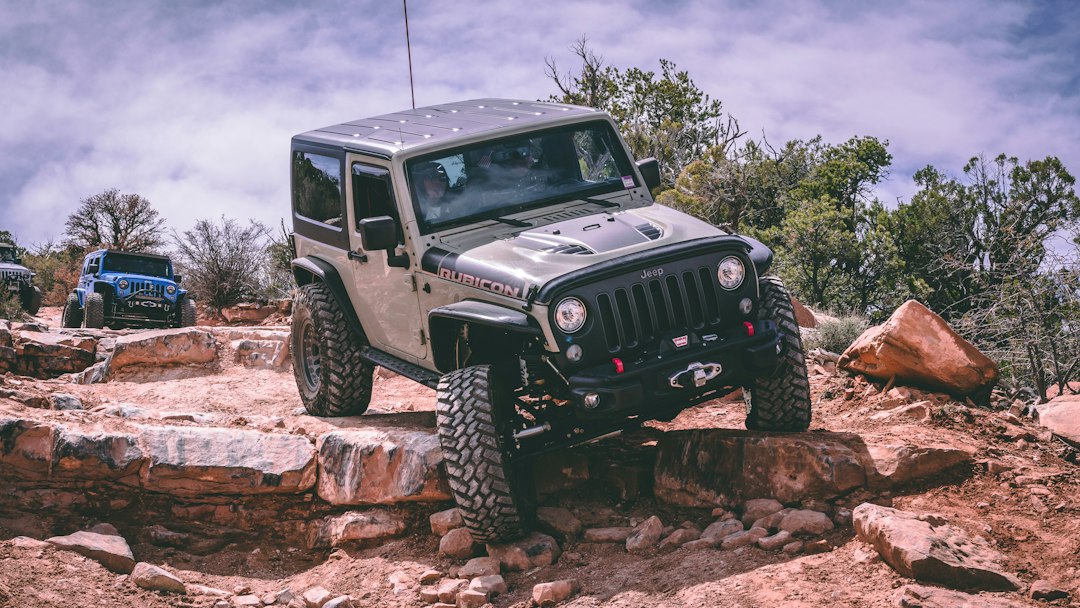
Photo by cody lannom on Unsplash
What to Look For in Budget All-Terrain Tires at This Price Point
Not every tire sold as an all-terrain deserves that designation off pavement. At the budget end of the market, a few specs separate genuinely trail-capable rubber from a highway tire with an aggressive appearance.
Load range and ply rating. This is the first filter to apply. A loaded overland build needs at minimum a load range E (10-ply rated) tire in the 33-inch class, or a D-rating (8-ply) on lighter midsize platforms. An E-load tire uses a stiffer sidewall construction that resists punctures on rocky terrain and holds its structure under the combined weight of gear, fuel, water, passengers, and a rooftop tent. Passenger-car rated tires in large diameters are not suitable substitutes. They operate near the edge of their structural capacity on a loaded 4x4 and degrade faster under the sustained heat of off-road use. For any build running overlanding gear, the LT E-rated designation is a structural requirement, not a preference.
Tread compound and temperature behavior. Budget tires historically used harder compounds to extend tread life and reduce warranty exposure. The problem with hard rubber is that it loses significant grip below 45 degrees Fahrenheit. If your overlanding includes shoulder seasons or elevation, look for a tire carrying the three-peak mountain snowflake (3PMSF) certification, which confirms it meets minimum traction standards on cold packed surfaces. Silica-enhanced compounds are now the standard for mid-tier A/T tires and provide a working balance between tread life and cold-weather performance.
Void ratio and self-cleaning behavior. All-terrain tires run a tread void ratio of roughly 30-50%, representing the open space between tread blocks. Higher void ratios self-clean in mud and loose dirt. Lower void ratios run quieter on pavement. A budget A/T in the 33-40% void range gives you a practical compromise for overlanders who still drive meaningful pavement miles between trailheads.
Stone ejectors. These are small fins or pins embedded in the main tread grooves that prevent small rocks from drilling into the groove base, which is a primary cause of premature wear on rocky trails. Any A/T tire without visible stone ejectors should be passed over.
Sizing accuracy. The “33-inch” label is used loosely in the market. A true 33-inch tire sits at approximately 33 inches of overall diameter. The LT265/70R17 and the 315/70R17 are both commonly used for builds targeting a 33-inch class fitment, but actual measured diameter varies between sizes, so confirming clearance before installation is essential.
The Three Best Budget All-Terrain Tires in 33-Inch Sizes
These three tires represent the strongest options in their price tier for overlanding use. Each has a clear best-use case and defined tradeoffs.
Cooper Discoverer AT3 XLT - Best for Heavy Builds and Rocky Terrain
The Cooper Discoverer AT3 XLT All-Season LT315/70R17 E 121/118S Tire is the choice for builds running significant gross weight. The 315/70R17 is one of the larger sizes in this price category for the 33-inch-class segment. The E load rating with a 121/118 load index provides substantial load-carrying capability, making it well-suited for heavily loaded overland trucks.
The Cooper Discoverer AT3 XLT is an all-season tire with a tread design suited to off-road use. Specific tread features, certifications, and warranty terms should be confirmed with current manufacturer documentation.
The honest tradeoff: the AT3 XLT runs louder on pavement than most competitors at this price. If you cover 400 miles of interstate to reach your trailhead, you will notice it over a long drive. If your truck primarily goes from home to camp to trail, road noise is not a meaningful factor.
Falken Wildpeak A/T4W - Best for Highway-Heavy Overlanders
The Falken Wildpeak A/T4W All Terrain 265/70R17 115T Light Truck Tire is an all-terrain light truck tire in the 265/70R17 size. Specific compound technologies and engineering features should be confirmed with current manufacturer documentation.
The 265/70R17 is a versatile size that fits a wide range of trucks and SUVs. For builds where this size fits the wheel well and clearance requirements, this all-terrain light truck tire is designed for varied terrain use. Confirm current certification status and warranty terms with the retailer.
The tradeoff is fitment: the 265/70R17 may not achieve the full 33-inch diameter that some builds target. Other Wildpeak A/T4W sizes are available, but pricing and availability vary by retailer and may not reliably stay within budget.
General Tire Grabber A/TX - Best Balanced All-Rounder
The General Tire Grabber A/TX, LT265/70R17 is the well-rounded pick for overlanders seeking a versatile all-terrain option. The Grabber A/TX features an LT construction suited to light truck applications and a tread design built for varied terrain use.
The shoulder tread scoops handle loose terrain with credible bite, and the relatively open tread pattern manages light-to-moderate mud without packing. At 60,000 miles, the Grabber A/TX treadwear warranty is the most generous in this comparison, which signals genuine compound confidence for on-road use. The LT designation confirms truck-grade construction throughout.
The tradeoff: the Grabber A/TX prioritizes all-around balance over specialization. It is not the most off-road-aggressive option in this group nor the most refined on pavement, but for a tire that performs competently across all conditions without a pronounced weak point, it is a strong default.
Side-by-Side Comparison
| Feature | Cooper AT3 XLT LT315/70R17 | Falken A/T4W 265/70R17 | General Grabber A/TX LT265/70R17 |
|---|---|---|---|
| Load Rating | E (121/118S) | 115T | LT-rated |
| Tire Class | All-Season All-Terrain | All-Terrain Light Truck | All-Terrain LT |
| Best For | Heavy builds, rocky terrain | Highway-distance overlanders | Versatile daily-driver builds |
For builds focused on rocky terrain and carrying heavy loads, the Cooper is the default pick. If you log significant highway mileage, the Falken is suited to that use case. If you want one tire suited to a wide range of conditions, the Grabber is the pick.
Load Ratings and Correct Inflation for Overlanding Builds
Picking the right tire is half the work. Running it at correct pressure for your specific conditions is equally important and is done wrong far more often than most overlanders realize.
The NHTSA tire safety guidelines recommend using the vehicle door placard pressure for highway driving. That guidance was written for factory-size tires. If you have moved to a different tire size, particularly a significantly larger LT fitment, recalculate your required inflation using load-inflation tables published by the Tire Industry Association, which match your tire’s load index to the cold inflation pressure required to support that load. The door placard number may underinflate a larger LT tire relative to its load rating.
For off-road use, the standard overlanding practice is to air down to 18-22 PSI for most A/T tires in the 33-inch class on dirt, gravel, and rocky terrain. Lower pressure increases the contact patch, reduces trail-induced vibration, and improves traction by allowing the tread to conform to the surface. Going below 15 PSI on an E-load A/T tire risks unseating the bead from the rim, which requires either a high-volume compressor or significant effort to reseat in the field.
The non-negotiable habit is airing back up before returning to highway speed. Running an aired-down A/T tire at 60 MPH generates carcass heat that accelerates structural fatigue and causes uneven tread wear that cannot be corrected with rotation. An onboard compressor is essential for any build that regularly airs down. The guide to best air compressors under $100 for 31-33 inch tires covers which compressor volumes can handle a 33-inch-class tire without overheating on repeated fill cycles.
For the Cooper specifically: the LT315/70R17 with a 121/118 load index is rated for a defined load capacity at its specified cold inflation pressure. That capacity is only available at the correct rated pressure. Running below placard pressure reduces the effective load capacity and increases heat buildup under load.
How to Install 33-Inch Budget All-Terrain Tires: A Step-by-Step Guide
Correct installation prevents the most common post-install problems: rubbing, vibration at highway speed, and TPMS warning lights. Work through these steps before and immediately after mounting.
-
Verify physical clearance before ordering. Measure from your current tire’s outer sidewall to the nearest fixed structure at full steering lock and full suspension droop. Common contact points are the front inner fender liner, the upper control arm, and the front sway bar end link. A 315/70R17 is a larger-diameter tire that typically requires meaningful lift on most half-ton trucks. A 265/70R17 may clear with a leveling kit on platforms with factory suspension rake. Do not guess; measure your specific platform.
-
Confirm wheel backspacing and offset compatibility. Taller A/T sidewalls paired with incorrect wheel offset can cause inner fender or steering component contact that only surfaces at full suspension travel. For most 17-inch wheel applications, a backspacing of 4.0-4.75 inches is the safe range for 33-inch class tires. Wheels with excessive positive offset push the sidewall toward the inner structure.
-
Request road force balancing at installation. Standard spin balancing identifies static imbalance but misses radial force variation, which is uneven stiffness around the tire’s circumference. Road force balancing applies a simulated road load during the cycle and catches issues that appear as persistent 60-75 MPH vibration. It typically costs $5-10 per tire more than standard balancing and is worth it on every new tire installation.
-
Torque lug nuts in a star pattern with a calibrated torque wrench. Do not rely on an impact gun estimate. Over-torquing warps rotors and makes roadside lug removal significantly harder. Under-torquing risks wheel loosening on trail. Use your vehicle’s specified torque value, typically 100-140 ft-lbs for most half-ton trucks and SUVs.
-
Confirm TPMS sensor compatibility before leaving the shop. Factory tire pressure monitoring systems calibrate to the original tire volume. A size change often triggers a persistent warning. Some vehicles require a manual relearn procedure; others need threshold updates in the ECU. Address this at installation before the first highway drive.
-
Retorque lug nuts after the first 50-100 miles. New mounting allows minor settling between the wheel and hub mating surface. Retorquing after initial miles is a standard precaution that confirms full seating and prevents the low-level looseness that can feel like an early vibration.
Common Mistakes When Buying Budget All-Terrain Tires
The sub-$150 all-terrain market has genuine quality. It also has a visible tail of products that hit the price by cutting the wrong specifications. These mistakes are the ones that cost overlanders money and time on trail.
Buying a passenger-rated tire in an oversized diameter. Some products appear in 33-inch-class sizes with all-terrain styling but carry a standard load (SL) passenger rating or a P-metric designation. A passenger-car-rated tire operating at full load on a built overland vehicle is near its structural limit before you leave the pavement. Sidewall flex from rocks and ruts generates heat that fatigues the carcass under sustained use. Deformation under low-speed technical driving reduces steering precision and increases the risk of bead unseating. For any vehicle carrying gear and passengers across trail terrain, LT E-rated construction is not optional.
Ignoring 3PMSF certification for shoulder-season overlanding. An all-terrain tire without three-peak mountain snowflake certification is essentially a warm-weather product. Without the certification, compound stiffness below freezing reduces grip on cold dirt, gravel, and hardpack significantly. Verify current 3PMSF certification status for each tire directly with the manufacturer before purchasing for cold-weather use. If your trips run into October at elevation or extend into spring in high-desert terrain, this distinction matters for traction and stopping distance.
Failing to budget a matching spare. A full-size spare is a baseline overlanding requirement, not an option. If you are upgrading from stock tires to a 33-inch-class fitment, your factory spare will not match. Running a significantly smaller spare on a 4x4 with a center differential risks binding the drivetrain if you drive more than a short recovery distance. The true cost of a 33-inch tire upgrade is four tires plus a fifth matching unit. Budget accordingly before you order.
Treating a treadwear warranty as off-road coverage. A 60,000-mile treadwear warranty documents manufacturer confidence in the compound under normal highway use. Most LT tire treadwear warranties explicitly exclude off-road use from coverage language. The warranty is useful as a benchmark for comparing compound quality across brands; it is not a reimbursement backstop for trail wear. Do not let warranty mileage substitute for understanding actual compound performance.
Mounting on unchecked wheels. Budget builds frequently pair new tires with older used wheels. Corrosion on the bead seat area of a wheel prevents the tire from seating fully against the rim, resulting in slow leaks that can escalate to bead unseating at speed or while airing down. Inspect every wheel’s bead seat for pitting and active corrosion before mounting. Any wheel with significant bead seat damage should be replaced; no amount of bead sealer will compensate for a structurally compromised seating surface.
Frequently Asked Questions
Are budget all-terrain tires under $150 actually capable on trail?
For most overlanding applications, yes. Cooper, Falken, and General Tire have established track records in owner communities over many model generations. Performance comparisons with premium A/T tires should be confirmed with current owner reviews and independent testing. For typical overlanding use on graded dirt roads, two-tracks, and occasional rocky sections, budget all-terrain tires from these established brands are widely used in the community.
Do I need a lift kit to run these tires on my truck?
On most midsize and full-size trucks, yes. The 265/70R17 often clears on trucks with factory suspension rake, sometimes with only a leveling kit. The 315/70R17 typically requires meaningful lift to clear front fender liners and steering components at full lock. Exact clearance depends on the platform; there is enough variation between model years and cab configurations that measuring your specific truck is essential before purchasing. See best lift kits under $1,500 for budget-focused options that provide the clearance you need without overbuilding.
What is the difference between LT and P-metric sizing on a 33-inch tire?
LT-metric tires are engineered specifically for light truck applications: higher load capacity, stiffer sidewall construction, greater resistance to sidewall puncture, and durability under the heat generated by sustained off-road use. P-metric tires in large diameters are passenger-car tires scaled up in size without a corresponding upgrade in structural capacity. The load capacity gap is significant: an LT E-load tire at max inflation carries roughly double the per-tire load of a comparable P-metric in the same diameter. For a vehicle loaded with camping gear, fuel, water, and recovery equipment, the LT designation is a structural requirement, not a marketing distinction.
How often should I rotate 33-inch A/T tires on an overland build?
Every 5,000-7,500 miles is the appropriate interval for LT all-terrain tires used in mixed on-road and off-road service, which is more frequent than the 7,500-10,000 mile intervals common on passenger vehicles. Off-road use creates uneven stress across the tread, particularly on front tires managing steering loads on rocks and ruts. If your build carries a full-size matching spare, include it in a five-tire rotation to keep all five units wearing evenly and ensure your spare always carries current tread depth. Consistent rotation also reveals alignment-related uneven wear before it shortens tire life significantly.
Conclusion
At the budget tier, you have three genuinely capable options for a 33-inch-class overland build. The Cooper Discoverer AT3 XLT is an E-load-rated all-season all-terrain tire suited to heavy builds. The Falken Wildpeak A/T4W is an all-terrain light truck tire suited to highway-distance overlanders. The General Tire Grabber A/TX is a well-rounded all-terrain option suited to varied conditions. Match the tire to your primary use case, get the load rating right, and pair it with a solid air management setup.
Bookmark this page before your next tire search, or drop your platform, current tire size, and primary terrain in the comments below.
Related Reading
- Best Air Compressors Under $100 for 31-33 Inch Tires - you need onboard air every time you change terrain
- Best Lift Kits Under $1,500: Coilover and Leaf Options - create the clearance you need before mounting 33s