Best Weatherproof Storage Boxes and Dry Bags Under $300
This post contains affiliate links. As an Amazon Associate, I earn from qualifying purchases at no extra cost to you.
Water does not announce itself on trail. It shows up as a creek crossing that runs six inches deeper than it looked from the bank, a squall that pins you at camp for five hours, or the slow condensation that builds overnight inside a soft-sided duffel while you sleep. By morning, your first aid kit is damp, your paper maps are warped, and the one dry pair of socks you were rationing for day three are soaked through.
The right weatherproof storage does not make your build look more serious. It makes it actually functional. Hard cases protect electronics from immersion and impact. Cargo boxes keep hardware sorted so you are not digging through a pile at 7 a.m. in the dark looking for a 10mm socket. Dry bags compress flat when empty and roll tight when full, handling the oddly shaped overflow that does not fit anywhere else.
Budget overlanders face a specific version of this problem: the mid-tier market is full of “weatherproof” labels that do not survive a real soaking. Knowing what IP ratings actually mean, which formats earn their price, and which specific products deliver separates a useful purchase from a storage bin that fails in its first season.
Three picks cover the full range: a hard case for submersion protection, a cargo box for daily-access organization, and a dry bag for soft goods and overflow. All are under $300 individually. The comparison table, step-by-step packing framework, and purchasing mistake list below make the decision straightforward.
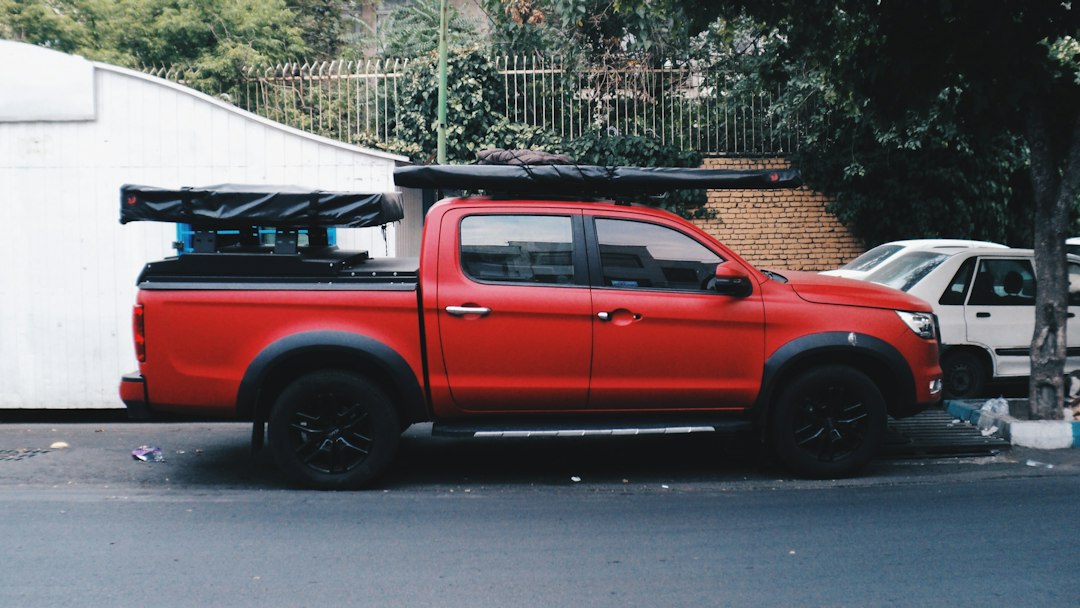
Photo by mdreza jalali on Unsplash
Why Weatherproof Storage Boxes and Dry Bags Belong on Every Overland Rig
Overlanding exposes gear to more sustained moisture than most outdoor pursuits. A single morning camped near a river deposits more surface water on exposed bags than a passing shower. Creek crossings splash into cargo areas on most trucks and SUVs without specialized sealing at the tailgate. Trail dust compounds the problem: fine silica migrates into anything with a loose lid and destroys optical coatings, jams charging ports, and contaminates first aid supplies across a single season of regular use.
The IP (Ingress Protection) rating system, defined in IEC standard 60529, gives you a standardized benchmark for evaluating container protection. The first digit rates solid particle resistance on a scale of 0 to 6, with 6 being fully dust-tight. The second digit rates water resistance on a scale of 0 to 9K, with 7 meaning the enclosure survives submersion to 1 meter for up to 30 minutes. A case rated IP67 is both fully dust-sealed and water-submersible at that depth. An IPX4 rating means splash resistance only. For anything passing through standing water, IPX4 is not adequate, regardless of how good the product photos look.
Practical overlanding storage breaks into three tiers based on protection level and access pattern:
- Hard cases (IP67 or better): electronics, first aid medications, comms gear, anything irreplaceable or sensitive to shock
- Weatherproof cargo boxes (structured, gasketed, water-resistant): tools, hardware, camp kitchen kit, daily-access consumables
- Roll-top dry bags (welded seams, fold-and-clip closure): clothing, sleeping bag liners, documents, overflow that does not fit rigid containers
None of these is a substitute for the others. A complete system uses all three, assigning each item to the tier that matches its failure consequence and daily access frequency. For context on how weatherproof storage integrates with broader remote-trip planning, the guide on Best Portable Water Filters And Storage Systems For Remote Overlanding covers complementary gear category decisions that overlap with storage.
Hard Cases vs. Dry Bags vs. Cargo Boxes: Choosing the Right Weatherproof Storage Format
Selecting a storage format comes down to three variables: how much moisture damage the gear can tolerate before becoming unusable, how frequently you need to access it in the field, and what weight and space budget your rig can absorb.
Hard cases top the protection chart. Rigid, lockable, and stackable, they handle full submersion and significant impact loads. The tradeoff is weight and real estate. An empty Pelican 1650 has real weight before you load anything into it. In the bed of a full-size truck, that is manageable. On a smaller rig operating near its payload limit, it requires deliberate planning.
Cargo boxes bridge the gap. Built-in dividers and lift-out trays provide organizational structure that a bare hard-case interior does not. Gasketed lids and positive-latch closures handle rain, splash, and standing water reliably, though most cargo boxes are not rated to full submersion. They earn their place for gear you access three to five times per day under varying conditions.
Dry bags sit at the opposite end: no rigidity, no structure, near-zero weight penalty, and the ability to compress flat when empty. They are not a backup solution. For soft goods and overflow, they are the correct primary tool, and no hard case replaces them efficiently.
| Format | Water Protection | Best For | Access Speed |
|---|---|---|---|
| Hard Case (Pelican 1650) | Waterproof, submersible | Electronics, comms, first aid | Slower (latches) |
| Cargo Box (YETI LoadOut GoBox 30) | Waterproof | Tools, hardware, daily-access gear | Fast (lift lid) |
| Dry Bag (ORTLIEB PS10 7L) | Waterproof | Clothing, docs, soft goods | Medium (roll-top) |
The starting configuration for most budget builds is one hard case for irreplaceables, one cargo box for daily-access items, and two to three dry bags for soft goods. That combination addresses the full protection spectrum without asking any single container to do everything.
Pelican 1650 Case: The Benchmark Weatherproof Hard Case
The Pelican 1650 Case No Foam (Black) has been the default answer for serious gear protection for decades, and nothing at this price point has meaningfully displaced it. Its waterproof construction has built a record across overlanding, military, and diving applications.
The no-foam version is the correct buy for overlanders. Pre-cut foam configurations require knowing exactly what you are storing before you order, and most builds evolve across seasons. The empty interior (28.43 x 20.43 x 7.31 inches usable) accepts your own foam cuts, velcro dividers, or aftermarket MOLLE panel inserts. An organizational system built around the empty case follows it across vehicles and configurations without requiring a new foam layout every time the contents change.
The design of the Pelican 1650 addresses a real operational consideration worth understanding. Moving from coastal camp to high-altitude terrain and back creates pressure differentials that affect sealed hard cases. A well-designed hard case accounts for this while maintaining its seal against liquid and particles. This is not a minor detail for anyone running mountain trails between elevations.
Two constraints deserve honest attention. First, the 1650 is physically large. The exterior dimensions (33 x 26 x 10 inches) demand deliberate placement in a cargo layout. If your bed already carries a fridge, a tool roll, and recovery gear, verify the footprint fits before ordering. If payload margin is a concern on your build, the breakdown in how to determine payload capacity and safe weight limits for your vehicle provides the framework for checking the numbers. Second, the 10-lb empty weight is meaningful for smaller rigs close to their rated limit.
Pelican backs the 1650 with a manufacturer warranty, per Pelican’s published warranty terms. For a case designed to outlast the vehicle beneath it, reviewing the warranty terms before purchase is worthwhile.
YETI LoadOut GoBox 30: Organized Weatherproof Storage for Daily-Access Gear
The YETI LoadOut 30 GoBox Divided Waterproof Cargo Case, Dry Box, Camera Case, Fishing Tackle Box, Wetlands Brown occupies the space between a bare hard case and a truck-mounted drawer: waterproof construction with real organizational structure built into the lid. The GoBox capacity suits a range of overlanding use cases, from camp kitchen gear to trail hardware or a first aid kit with room for small tools.
The YETI GoBox 30 features a waterproof construction suited to outdoor use. The lid closure keeps out rain, splash, and standing water. The divided interior keeps hardware and consumables separated so nothing migrates to one corner when the cargo area shifts across rough terrain.
A few specific points for overlanding use:
- The GoBox 30 has a footprint that fits within typical truck bed layouts without requiring a full cargo rearrangement
- The divided interior pairs well with small zip pouches for sub-organizing within each section, which prevents hardware from mixing with first aid or food items
- YETI backs the GoBox with a manufacturer warranty; consult their published terms for coverage details
Where the GoBox falls short of a Pelican hard case is sustained water immersion. It handles rain, splash, and standing water on the cargo floor reliably, but is not designed for submersion. If your use case involves the cargo area submerging during river crossings, the Pelican is the correct tool. If you are managing a camp kitchen kit or a set of trail hardware that you open frequently throughout the day, the GoBox wins on access speed and organizational clarity over any hard case at this price point.
At under $180, the GoBox is the highest per-liter cost among the three picks in this guide. The justification is durability and organization for gear that needs to be located under poor conditions. For frequently accessed items, that tradeoff holds up.
ORTLIEB PS10 Dry Bag: Lightweight Weatherproof Protection for Soft Goods and Overflow
The ORTLIEB Ultra Lightweight Dry Bag PS10 /7L K20407 Black makes the case that dry bags are a primary storage category, not a secondary one. The PS10 uses a waterproof construction built for sustained outdoor use. That construction approach is the critical distinction between a dry bag that survives submersion and one that admits water within a season.
Stitched seams have needle penetrations at every stitch point. Those penetrations allow water entry under sustained pressure or immersion. A sealed seam construction creates a continuous material bond with no penetration. The roll-top closure relies on folded material rather than a zipper or gasket - it becomes water-tight at three or more complete rolls. ORTLIEB publishes details for the PS10 on their official product page, which gives you a specific technical reference point when evaluating unbranded roll-top bags that claim equivalent protection without published specs.
At 7 liters, the PS10 is sized for soft goods, not bulk gear. The right contents for a single 7L bag: a sleeping bag liner, a three-day clothing rotation, a document packet including registration and permits, or a compact electronics organizer for cables and adapters. The ultra-lightweight design means carrying two or three simultaneously adds almost nothing to your payload calculation.
For budget builds, the PS10 is the logical starting point in building out a storage system. Two 7L bags can handle all soft goods while leaving substantial budget room for the hard case protecting electronics. When empty, the PS10 nests flat inside a Pelican or GoBox, storing without consuming a dedicated footprint.
How to Pack and Secure Weatherproof Storage in Your Build
Getting the right containers is half the problem. How you pack and mount them determines whether the system functions under actual trail conditions. A waterproof case full of randomly loaded gear does not save time or protect anything reliably. It just costs more than the Rubbermaid bin it replaced.
Use this sequence when organizing weatherproof storage before a trip:
-
Categorize every item by water sensitivity and daily access frequency. Gear that cannot survive moisture (comms, navigation electronics, first aid medications, camera equipment, satellite communicators) goes in the first group. Items you access multiple times per day regardless of conditions go in the second group. Soft goods, spare clothing, spare footwear, and overflow go in the third group.
-
Assign each group to the matching container type. Group one goes in the Pelican hard case, period. Group two goes in the YETI GoBox where divided organization and fast lid access serve the access frequency. Group three goes into ORTLIEB PS10 dry bags sized to the volume.
-
Mount or secure each container before loading weight into it. An unsecured Pelican 1650 in a truck bed impacts the tailgate on every hard deceleration and damages the case over time. Use appropriate tie-down straps to fix it to bed rails or cargo tie-down anchors. The GoBox can be secured with bungee straps across its handles. Dry bags tuck into remaining gaps or clip to anchor points with a carabiner through the buckle.
-
Label the exterior of every container clearly. A paint marker or weatherproof adhesive label takes two minutes. Finding the right case in a night emergency during a rainstorm is not the moment to read contents by opening each lid. Mark every container with its category and the one or two most critical items inside.
-
Re-evaluate the layout after your first trip. Access patterns in the field rarely match what seemed logical at home. One adjustment after the first trip typically locks in the layout for the rest of the season.
Common Mistakes to Avoid When Buying Weatherproof Storage Boxes and Dry Bags
Treating “water-resistant” and “waterproof” as interchangeable. Most inexpensive hard cases and cargo bins are splash-resistant at best. The lids snap shut, they appear sealed, and they handle light rain without issue. A creek crossing where water rises to the cargo floor is a different scenario entirely. Look for IP67 or IP68 on hard cases, or welded seams plus a verified roll-top closure on dry bags. If a product listing does not specify an IP rating or construction standard, the safe assumption is splash resistance until proven otherwise by documentation.
Buying too large on the first purchase. A Pelican 1650 seems like it covers everything, but if it occupies half your usable cargo space, you will work around it rather than with it on every trip. Match case size to the actual gear you plan to protect today. It is cheaper to start with a 1450 and add a 1650 later than to surrender permanent cargo space for future headroom you do not currently need.
Skipping dry bags because hard cases are already present. Hard cases cannot store soft goods efficiently. A sleeping bag liner, base layers, and a set of trail socks waste rigid interior space designed for electronics. Dry bags add almost no weight, cost little, and handle soft goods far better than any hard case. They are not fallback storage. They are a separate, non-overlapping tool with a distinct job in the system.
Under-rolling the dry bag closure. Three full rolls is the minimum for the ORTLIEB PS10 roll-top to form a reliable seal. Two-roll closures consistently allow water entry on sustained submersion, a failure pattern documented across outdoor gear forums and retailer Q&A threads. Roll the closure until the bag looks over-sealed, then clip. It takes ten seconds and eliminates the most common user-driven failure mode.
Neglecting hard case gasket maintenance. Lid gaskets on hard cases degrade under UV exposure, dry-climate conditions, and repeated compression cycles. Periodic inspection and lubrication with silicone grease is recommended practice. A gasket that looked fine when the case was new may show cracking or compression set over time. Inspect it before any trip where water exposure is certain. Replacement gaskets for the 1650 are available, making this a manageable maintenance step with significant consequences if skipped.
Frequently Asked Questions About Weatherproof Storage Boxes and Dry Bags
What is the difference between IP67 and IP68 protection ratings for storage cases?
IP67 means the enclosure is fully dust-tight (rated 6 on the solid particle scale) and survives submersion to 1 meter of water for up to 30 minutes, per IEC standard 60529. IP68 extends water protection beyond those parameters, with the manufacturer specifying the exact depth and duration rather than the standard itself. For most overlanding scenarios, a creek crossing or cargo-area flooding is unlikely to sustain submersion beyond 1 meter, making IP67 sufficient for trail use. IP68 cases are targeted at diving and extreme aquatic applications where depth and duration exceed everyday trail conditions. The price premium for IP68 over IP67 is rarely justified for overland storage purposes.
Can I replace a full three-container system with a single large hard case?
Not practically. A single large hard case creates compounding problems in the field. It wastes interior space around irregularly shaped items because the flat, rigid floor and walls do not conform to gear. Without built-in dividers, contents migrate together on rough terrain regardless of how carefully you pack initially. It also adds significant weight to protect gear that does not need that level of protection, such as clothing or trail snacks. The practical answer for most builds is a three-tier system: one hard case for moisture-sensitive irreplaceables, one cargo box for daily-access items that benefit from organizational structure, and two or three dry bags for soft goods and overflow. That configuration covers the full protection spectrum without forcing tradeoffs within any single container.
Do ORTLIEB dry bags maintain their waterproof performance over multiple seasons of use?
The PS10’s waterproof construction addresses the primary long-term failure point of conventional dry bags, which is seam leakage under sustained pressure. The roll-top closure relies on folded material rather than a zipper or gasket. Long-term performance depends on two factors: avoiding abrasion damage to the exterior material from contact with rough cargo surfaces, and ensuring the closure is rolled fully (three rolls minimum) before each use. ORTLIEB backs the PS10 with a manufacturer warranty per their published terms. Storing the bag flat in a cool, dry location between trips extends material life.
Conclusion
Weatherproof storage is not a visible upgrade. It does not change how your rig handles terrain or how it looks at the trailhead. What it does is protect the investment already made in the gear that matters when conditions turn against you. The first aid kit that needs to be intact when you need it. The comms gear that keeps you reachable on remote terrain. The dry clothes that determine whether a wet night is a minor inconvenience or a genuine problem.
For most budget builds, the right starting sequence is two ORTLIEB PS10 dry bags for soft goods and one Pelican 1650 for electronics and irreplaceables. Add the YETI LoadOut GoBox 30 when daily-access organization becomes a recurring frustration. That order keeps upfront cost manageable while protecting what matters most from the first trip out.
If this helped you sort out your storage setup, bookmark it before your next gear audit or drop a comment with the configuration you landed on.